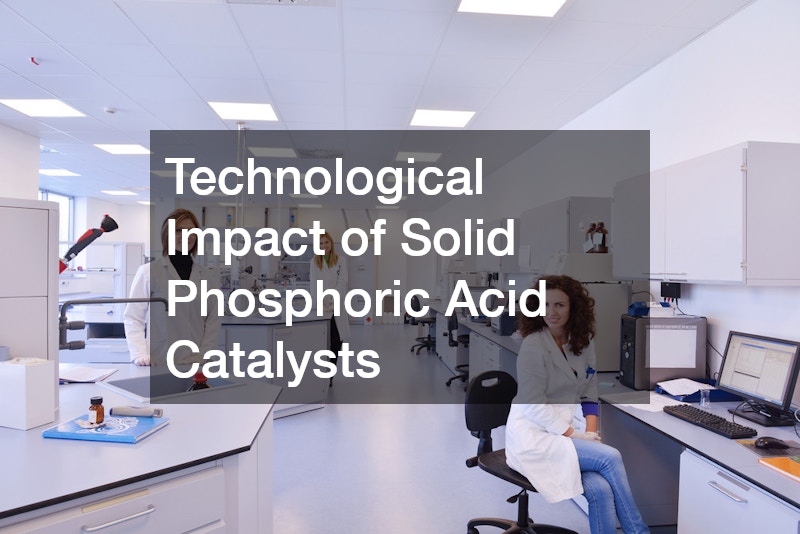
Solid phosphoric acid catalysts play a crucial role in the petrochemical industry, where they are predominantly used for processes such as alkylation. In this context, they facilitate the combination of isobutane and olefins to produce high-octane gasoline—a fuel characterized by its superior performance and energy efficiency. The ability of these catalysts to drive reactions at lower temperatures results in reduced energy consumption, thus promoting sustainability.
1. What are Solid Phosphoric Acid Catalysts?
1.1 Historical Background and Development
Solid phosphoric acid catalysts (SPACs) have played a vital role in the evolution of the chemical industry since their inception. Their development can be traced back to innovations in catalysis during the early 20th century.
The introduction of SPACs revolutionized the production processes in several industries by enhancing reaction rates. Over the years, they have undergone numerous modifications to improve their efficiency and sustainability.
As demand for cleaner and more efficient industrial processes has grown, SPACs have emerged as a critical component. This evolution marks a significant shift towards more eco-friendly and cost-effective industrial practices.
1.2 Comparison with Other Types of Catalysts
In comparison to other catalyst types, SPACs offer a distinct blend of cost-effectiveness and operational efficiency. While catalytic converters also induce chemical reactions, SPACs are renowned for their robust nature and longevity.
The environmental impact of SPACs is significantly lower compared to traditional catalysts. Being less prone to contaminating products, they provide a greener alternative to more polluting catalysts.
SPACs have demonstrated superior performance in various reaction environments, offering greater thermal stability. This makes them especially advantageous in high-temperature industrial applications.
2. How are SPACs Used in Industrial Applications?
2.1 Application in the Petrochemical Industry
In the petrochemical industry, solid phosphoric acid catalysts are pivotal in key processes such as the production of gasoline and synthetic rubber. By improving the quality and yield, SPACs have streamlined production processes.
Their application extends to the removal of impurities, enhancing the overall efficiency of petrochemical operations. This not only increases productivity but also reduces operational costs significantly.
Through the use of SPACs, companies have achieved better fuel performance and reduced emissions. Such improvements are crucial as the industry seeks to adhere to stricter environmental regulations.
2.2 SPACs in Polymer Production
The application of SPACs in polymer production has led to the development of higher-quality plastics and synthetic materials. Their ability to facilitate polymerization reactions makes them a favorite in this industry sector.
Manufacturers have benefited from the enhanced structural properties of polymers enabled by SPACs. Enhanced durability and flexibility of polymers have expanded their use in various applications, including construction and consumer goods.
By optimizing reaction conditions, SPACs have made polymer manufacturing processes more energy-efficient. This aligns with the industry’s drive towards resource conservation and sustainability.
3. What are the Environmental Impacts of SPACs?
3.1 Reduction of Emissions and Waste
Solid phosphoric acid catalysts contribute significantly to the reduction of industrial emissions. They facilitate reactions that produce fewer by-products and minimize waste generation.
With SPACs, industries have managed to cut down on greenhouse gases, contributing positively to global climate change mitigation efforts. This technology supports a move towards a circular economy by enhancing the recyclability of materials.
Implementation of SPACs has been pivotal in achieving cleaner production lines. This transition not only supports regulatory compliance but also promotes corporate environmental responsibility.
3.2 Potential Environmental Concerns
While SPACs are largely beneficial, they do pose some potential environmental concerns that must be managed. The disposal of spent catalysts can lead to toxic contamination if not handled properly.
Efforts to mitigate risks involve the development of recycling programs and safer disposal methods, thus minimizing their environmental footprint. Research is ongoing to enhance the degradability of catalysts after their industrial use.
Understanding the life cycle of SPACs helps in identifying stages that could be improved for better environmental outcomes. This holistic approach ensures their environmental impacts are as low as practicable.
4. What Innovations are Emerging in SPAC Technology?
4.1 Advancements in Catalyst Design
Recent advancements in SPAC design focus on enhancing their reactivity and selectivity. Novel formulations and coatings have been introduced to boost their catalytic activities.
These innovations not only amplify the effectiveness of processes but also extend the lifespan of the catalysts. Advanced design has paved the way for more complex chemical reactions to be undertaken with ease.
By tailoring catalysts to specific industrial needs, efficiency is significantly improved. These design enhancements carry significant implications for industrial productivity and cost savings.
4.2 Integration with Renewable Energy Sources
Integrating SPACs with renewable energy technologies is a promising innovation in this field. This integration aims to harness cleaner energy forms to power reaction processes.
The adoption of SPACs in conjunction with renewable energies exemplifies a strategic move towards sustainable industrial practices. By reducing reliance on fossil fuels, this approach is part of a larger transition to renewable energy sources.
These synchronized systems highlight a profound synergy between traditional catalysts and modern energy solutions. This enhancement in SPAC application underscores their potential as enablers of sustainable technological futures.
5. How Does SPAC Technology Impact Economic Factors?
5.1 Cost Efficiency and Productivity
SPAC technology greatly enhances cost efficiency by minimizing raw material usage and reducing waste. The long-term savings associated with their use contribute positively to a company’s bottom line.
Improved productivity stems directly from the faster reaction rates and higher yields that SPACs facilitate. This makes them an attractive option for industries looking to scale up operations without proportionate cost increases.
The cost savings realized through the use of SPACs can be reinvested into further research and development. This fosters a cycle of continuous improvement and technological advancement within firms.
5.2 Effect on Global Market Trends
As the demand for more sustainable industrial solutions grows, SPAC technologies are influencing global market trends. Their adoption signifies a shift towards cleaner and more efficient production methods.
This shift is reflected in increasing investments in catalysis technology and related fields. The global market sees SPACs as pivotal to both economic development and environmental sustainability.